
Article: How to Style Large Crystals in a Luxury Home

How to Style Large Crystals in a Luxury Home
A remarkable crystal does more than fill a space. It gives the room a point of view.
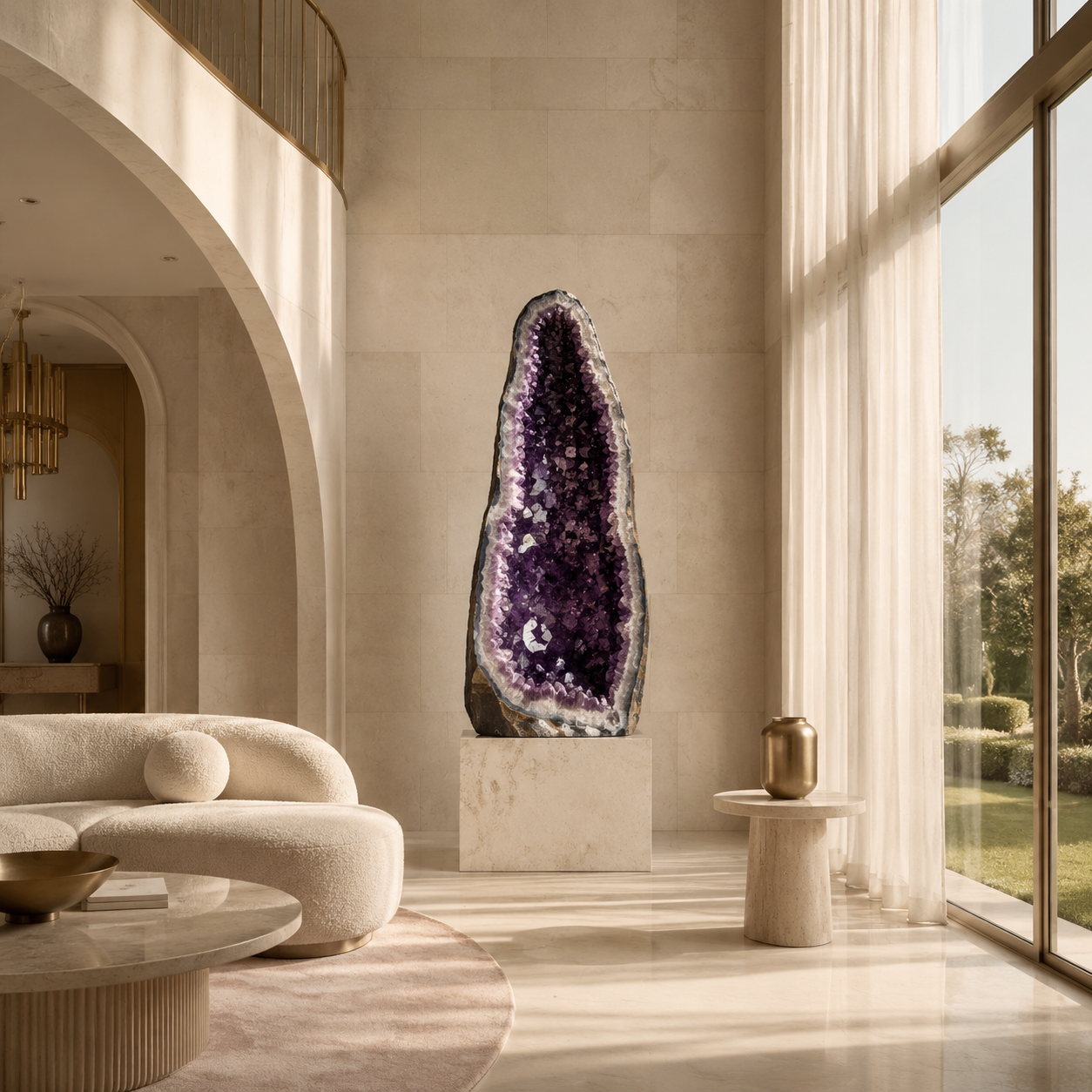
Large amethyst cathedrals, sculptural quartz formations and one-of-a-kind geodes carry a presence that few decorative objects can imitate. Created by the Earth over immense periods of time, each specimen introduces natural color, texture, history and individuality into a home.
But styling a large crystal beautifully requires more than placing it wherever there happens to be room. The most luxurious interiors give statement pieces space to be seen. They consider proportion, light, surroundings and the way a person moves through the room.
When thoughtfully placed, a large crystal does not feel like an accessory added at the end. It becomes part of the architecture of the space.
Begin With the Crystal, Not the Trend
Before deciding where a crystal should go, spend time looking at the piece itself.
Notice its height, width, color, silhouette and visual weight. Is it tall and architectural? Low and expansive? Delicately colored or dramatically saturated? Does it look most extraordinary from the front, or does another angle reveal a beautiful edge, mineral layer or crystalline interior?
A towering amethyst cathedral may need vertical room and a clean wall behind it. A wide quartz cluster may be better appreciated on a substantial console or pedestal. A geode with an exquisite interior deserves an angle that allows its crystals to meet the light.
Luxury begins with honoring what makes the specimen distinctive—not forcing it into a decorating formula.
Choose Scale With Confidence
One of the most common styling mistakes is choosing a piece that is too small for its surroundings.
In a grand room with high ceilings, large furniture and expansive walls, a modest specimen can disappear. A substantial crystal, however, can anchor the room and give the eye somewhere to rest.
Scale does not mean that every crystal must be enormous. It means that the piece should have enough presence for its intended location. A crystal displayed on a console should relate to the width and height of the furniture. A floor-standing geode should feel intentional beside a fireplace, staircase or architectural opening—not as though it were placed there temporarily.
When in doubt, fewer larger pieces often feel more refined than many small objects competing for attention.
Give a Statement Piece Room to Breathe
Exceptional specimens need negative space.
Allowing open wall, floor or surface area around a crystal helps the eye understand its form. When the surrounding area is crowded with books, frames, candles and decorative accessories, even a magnificent piece can lose its impact.
Think of the way art is displayed in a gallery. The space around the object is part of the presentation.
This does not mean the room must be minimal. A layered, expressive home can still showcase a large crystal beautifully. The key is hierarchy: decide which object is meant to lead and let the surrounding elements support it.
Use Natural Light Thoughtfully
Light can transform the appearance of a crystal throughout the day.
Clear quartz may capture and reflect morning light. An amethyst cathedral may reveal greater depth when illuminated from the side. Crystalline edges can sparkle under a carefully placed picture light or soft directional lamp in the evening.
Whenever possible, observe the intended location at different times of day before finalizing the placement. Notice where shadows fall, whether glare obscures the specimen and how its color responds to the room’s natural and artificial lighting.
Beautiful illumination should reveal texture without making the display feel theatrical.
Also consider the material itself. Some minerals can fade or change with prolonged exposure to strong direct sunlight. Ask about the care requirements of the specific specimen before placing it beside an intensely sunny window.
Create a Quiet Relationship With the Room
A crystal does not need to match every color in the interior. In fact, the most memorable rooms often allow natural materials to provide contrast.
A purple amethyst cathedral can bring richness to a neutral cream room. Clear quartz can add sculptural brilliance to a dark, modern interior. Rose quartz may soften marble, brass or strongly architectural furniture. Smoky quartz can echo wood, bronze and earth-toned textiles without disappearing into them.
Instead of trying to match colors exactly, look for relationships in tone, material and mood. A polished stone pedestal can quietly connect a mineral specimen to a marble table. A restrained brass base may relate to nearby lighting. A textured wall can make the natural surface of a geode feel even more intentional.
The goal is conversation, not perfect coordination.
Style Large Crystals Room by Room
The Entryway
An entryway establishes the emotional tone of a home. A statement crystal placed on a console, pedestal or architectural niche creates an immediate sense of discovery.
Choose a piece with a strong silhouette that can be appreciated from several feet away. Keep nearby accessories limited so the arrival feels intentional rather than crowded.
The Living Room
In a living room, a large crystal can function almost like sculpture. Consider placing it beside a fireplace, near a window, at the end of a console or in an otherwise empty corner that needs visual weight.
The piece should be visible from the primary seating area, but it should not interrupt conversation or movement through the room.
The Dining Room
A dramatic specimen can bring natural artistry to a dining room without competing with the table setting. A geode on a sideboard, centered beneath artwork or displayed on a pedestal can create a memorable backdrop for gatherings.
Avoid placing a very large piece directly on the dining table if it blocks sightlines or makes serving difficult.
The Bedroom
Bedrooms benefit from pieces with a quieter visual presence. Rose quartz, pale amethyst, calcite and soft-toned formations can introduce beauty without making the room feel overly formal.
Consider a crystal on a substantial dresser, a low pedestal or a console across from the bed. Keep the arrangement simple so the room remains restful.
The Home Office or Library
A crystal can add organic form to a room dominated by books, screens and straight lines. A specimen on a credenza, shelving unit or dedicated pedestal can become an inspiring focal point without occupying the working surface of the desk.
A Staircase or Landing
Stair landings and transitional spaces are often overlooked, yet they can be ideal for sculptural pieces. A tall geode or crystal cathedral can draw the eye upward and connect different levels of the home.
Always preserve a generous and safe walking path.
Consider the Pedestal Part of the Design
The base supporting a crystal should feel deliberate.
Pedestals in limestone, marble, wood, plaster or metal can raise a specimen to the appropriate viewing height and give it architectural importance. The material should complement the interior while remaining visually quieter than the crystal itself.
Height matters. A low, wide formation may need elevation so its surface can be appreciated. A tall cathedral may look best closer to the floor on a discreet base. Before committing to a custom pedestal, test several heights using sturdy temporary platforms.
For extremely heavy pieces, beauty must be supported by proper engineering. Confirm that the pedestal, floor and mounting method can safely carry the weight.
Remember Practicality and Safety
Large crystals can be exceptionally heavy, uneven and delicate at their edges. Placement should account for children, pets, doors, foot traffic and everyday cleaning.
Do not position a top-heavy specimen where it can be easily bumped. Protect furniture surfaces when necessary, and use professional movers or installers for pieces that cannot be safely handled by one person. If the crystal is displayed on a pedestal, the base should be level, stable and appropriate for the specimen’s dimensions and weight.
A luxurious display should feel effortless—but it should never be careless.
Let One Extraordinary Piece Be Enough
A room does not need a collection of crystals to feel connected to nature.
Sometimes one exceptional specimen is more powerful than many. It allows the beauty of the material to be understood and gives the piece the visual importance of sculpture or fine art.
Choose slowly. Look for a crystal that feels proportionate to the room, compelling from the angles in which it will be viewed and distinctive enough to remain meaningful as the interior evolves.
The finest statement pieces do not merely follow a decorating season. They become part of the story of the home.
Curating a Crystal for Your Space
Selecting a large crystal is both an aesthetic and practical decision. Photographs can introduce a piece, but scale, depth, texture and color often become more apparent through video, measurements and thoughtful consideration of the intended room.
At Haus of Healing, we curate one-of-a-kind crystals as natural works of art for extraordinary spaces. We can help you consider the specimen’s scale, character, placement and relationship to your home, hotel or office so the final selection feels as intentional as the interior itself.
Because the most beautiful placement is not simply where a crystal fits.
It is where it belongs.
Read more
What Are Crystals? A Beautiful Introduction to Earth’s Natural Treasures
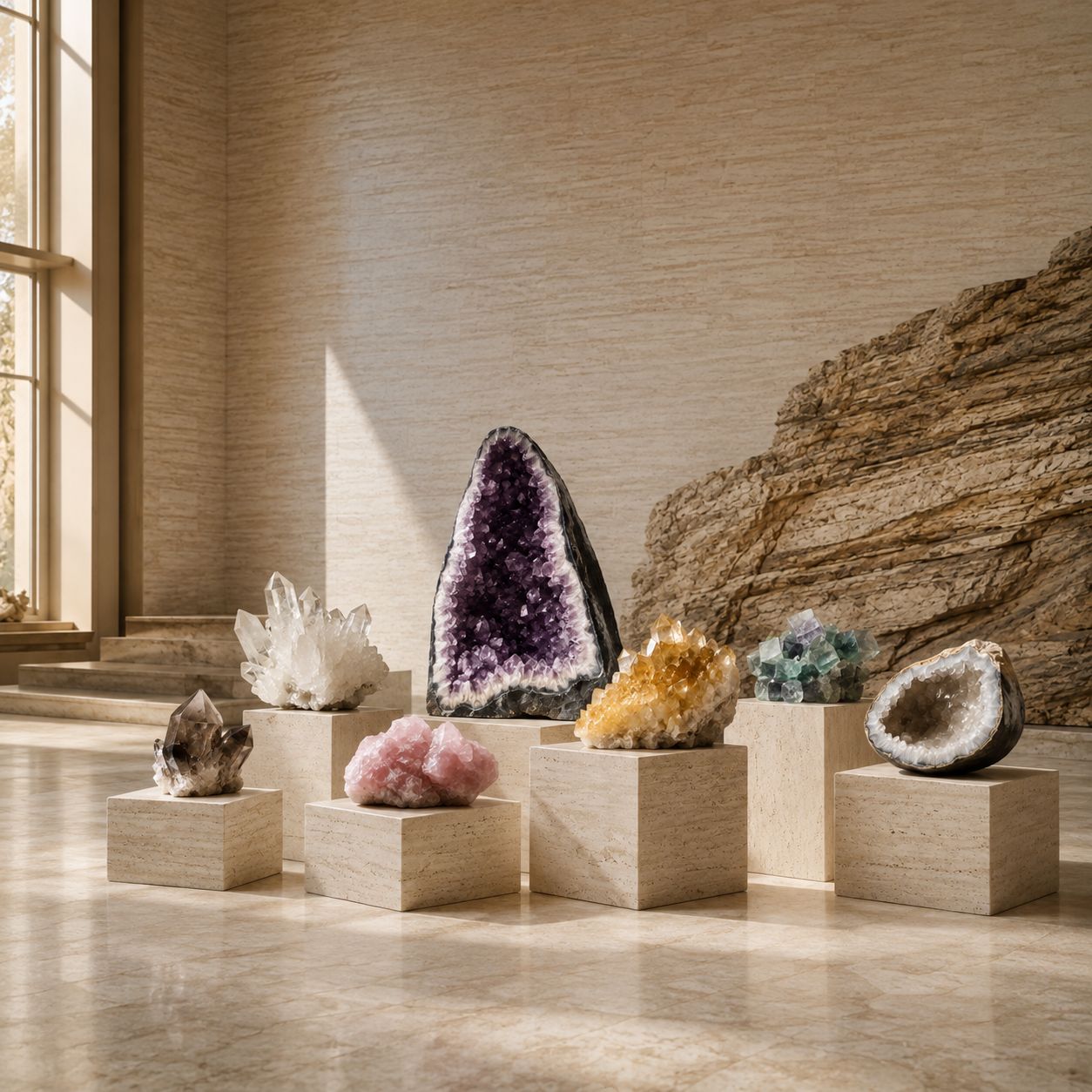
How do crystals form, what makes a geode, and why is every natural specimen unique? Discover the science, beauty and extraordinary story behind Earth’s natural treasures.
Read more